C09 / Gentle
The Light in the Empty Theater
A closed theater repeats the same brief display each afternoon. The light is visible; the explanation needs a closer look.
An original fictional case. All stories and characters are fictional.
The Story
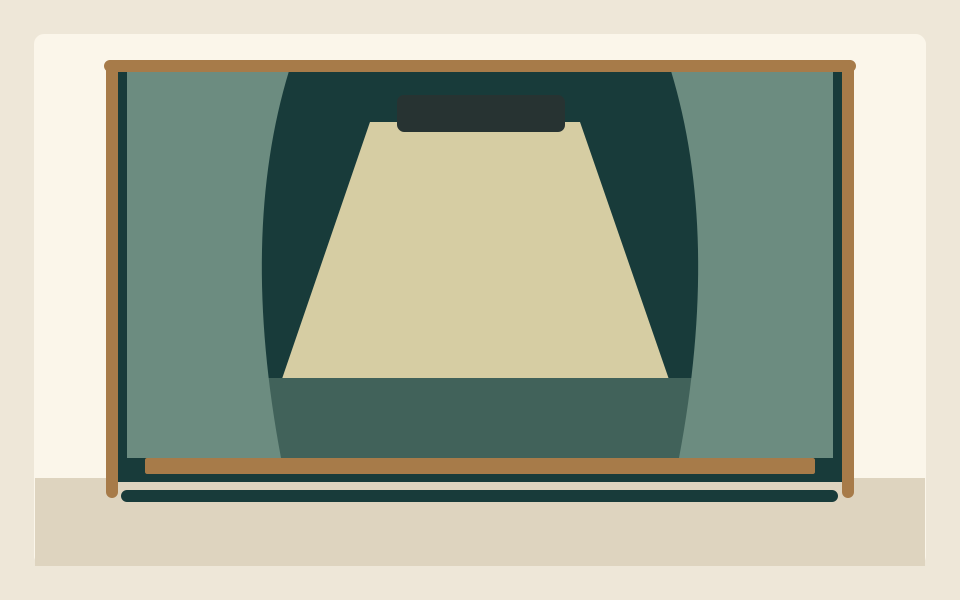
For three afternoons, Nina noticed the same thing while walking past the little theater. The building was closed to audiences for a week while the seating was being refurbished. Its front doors were shut, its posters had been taken down, and the foyer looked still. Yet at exactly 16:00 a pale green light appeared on the stage. Amber followed, then white, and then the room went dark again.
Nina could see the stage through the broad street window because the foyer curtain had been pulled aside for cleaning. The light was not a glimpse from an inaccessible corridor or a mysterious reflection reported by somebody else. She watched from the public pavement. Her friend Tomas passed with her on the third afternoon and said, “Someone must be practicing inside.” Nina realized that she had been silently telling herself a similar story.
Their observation was specific. On Monday, Tuesday, and Wednesday, the display began at 16:00 according to the public square’s reference clock. Green lasted five seconds, amber five seconds, and white five seconds. Then the stage lights went off. There were no extra changes between those three colors, and no second display while they watched. The exact sequence was the same on all three days.
A notice fixed beside the theater’s street-facing door had been there since the closure began. It read: “Audience closure, 1–7 November. Automatic stage-light check daily at 16:00: green 5 seconds, amber 5 seconds, white 5 seconds, then off. The check runs from the scheduled controller and does not require a person to operate the lights in the building.” This is the whole relevant schedule, not information discovered only after the mystery is answered.
Below the notice was the venue’s public maintenance summary. The caretaker updated it after the checks. Its three completed entries recorded Monday 16:00, Tuesday 16:00, and Wednesday 16:00 as automatic scheduled checks, each completed with the listed green–amber–white sequence. The case gives those entries as accurate records of the controller’s automatic runs. They were available for Nina and Tomas to read from the pavement, without entering the closed venue.
Tomas had looked at the large word “Closed” and assumed the rest of the notice concerned ticket refunds. Nina had done much the same. The moving light inside felt more like an event than the printed schedule beside the door, so their attention had gone toward the window. Now the paper and the observation could be compared directly: start time, order, duration, and ending.
The notice did not say nobody could ever be inside during the week. Workers and the caretaker had ordinary reasons to visit at other times. Nor did Nina have a way to see every room from the street. Those limits mattered because “the lights moved” and “a person was operating them” were different statements. The first was observed. The second was an explanation they had supplied.
Nina copied the short schedule into her notebook, leaving the heading “What we saw” separate from “What we assumed.” There was no need to seek a way into the building or inspect any electrical equipment. The public facts were enough for a much smaller task: explain the repeated display, and decide whether seeing it established that somebody must have been practicing or operating the lights inside.
Written records
Public schedule and accurate maintenance entries
| Source | Time and sequence |
|---|---|
| Posted automatic schedule | Daily 16:00; green 5s → amber 5s → white 5s → off |
| Monday recorded run | 16:00; automatic check completed as scheduled |
| Tuesday recorded run | 16:00; automatic check completed as scheduled |
| Wednesday recorded run | 16:00; automatic check completed as scheduled |
| Street observations | Same start, order, durations, and ending on all three days |
The Clues
- The posted schedule announces an automatic daily 16:00 check with green/amber/white for five seconds each, then off.
- The automatic controller does not require an operator inside the building for this check.
- The accurate public maintenance entries record automatic completed runs on all three observed days.
- The observed start times, sequence, durations, and ending match the announced checks exactly.
- A street view does not show every room, and the closure notice does not state that the building is always unoccupied.
Your Question
What accounts for the repeated display, and does seeing it prove that someone was operating the lights inside?
Take a moment with the facts, or use a hint below. You can open the explanation at any time.
Hint 1
Compare the observation with all four parts of the posted schedule: start, order, duration, and ending.
Hint 2
The maintenance entries identify the runs as automatic. That can explain the lights without making a claim about every room’s occupancy.
Reveal the Truth — spoilers ahead
The explanation
The display was the scheduled automatic stage-light check. Its announced start, green–amber–white order, five-second intervals, and final switch-off match every observation. The supplied maintenance entries also identify those particular runs as completed automatic checks. The explanation is already present in the public material; it does not depend on an undisclosed program introduced at the end.
No person had to be operating the lights inside for those checks to occur. The notice explicitly describes that feature of the schedule. Nina and Tomas had moved from observing a change in light to imagining a person producing it. The accurate records and the matching pattern give them a specific account that does not require the imagined rehearsal.
This is not proof that every part of the theater was empty. A worker could have been elsewhere in the building without causing the display, and the pavement view cannot settle that separate question. The evidence establishes the automatic source of the recorded checks and removes the need for an operator; it does not turn a closed ticket desk into a complete occupancy record.
Tomas read the smaller lines on the notice at last. Nina crossed out “someone practicing” in her notebook and replaced it with the named check, keeping the observation itself unchanged. The following afternoon, she saw the green light as she passed the window and smiled at its ordinary punctuality. A familiar building could look mysterious for fifteen seconds without hiding anything alarming.